What Is the Postpartum Period?
The postpartum period typically refers to the first six weeks after childbirth, though recovery often continues for several months.1 Recovery varies depending on whether birth was vaginal or cesarean.
During this time:
- The uterus returns to its pre-pregnancy size
- Hormone levels shift
- Bleeding (lochia) gradually decreases
- The body repairs tissues affected by birth
Physical Recovery After Vaginal Birth
Most soreness improves significantly within a few weeks. After a vaginal birth, you may experience vaginal soreness, perineal swelling or stitches, bleeding for several weeks, mild cramping (especially during breastfeeding), and breast fullness as milk comes in.
Learn about the physical changes your body goes through after childbirth
Cesarean Recovery
Cesarean birth involves surgical healing in addition to postpartum recovery. Full recovery may take longer than vaginal birth, but many parents return to normal activity within several weeks with proper care.1
You may experience incision tenderness, fatigue, limited mobility early on, and activity restrictions.
Find out what cesarean aftercare involves and how to support your recovery
Bleeding and Uterine Healing
Postpartum bleeding (lochia) is normal and may last up to six weeks. These may signal complications requiring evaluation.1
Call your provider if you experience:
- Soaking a pad in an hour
- Large clots
- Foul odor
- Fever
Breast Changes and Lactation
Breast fullness often begins 2 to 5 days after birth. If you plan to breastfeed, support can help prevent complications.
Common experiences include engorgement, tenderness, leaking, and nipple soreness.
Explore breastfeeding guidance, common challenges, and how to get support
Sleep and Fatigue
Sleep in the postpartum period is often fragmented. It is common to feel profound tiredness, emotional sensitivity, and difficulty concentrating. Accepting help, resting when possible, and sharing responsibilities can support recovery.
Emotional Changes After Birth
Hormonal shifts after delivery are significant. Up to 80% of new mothers experience temporary mood changes known as the “baby blues.”2 These typically resolve within two weeks. If symptoms persist or worsen, additional support may be helpful.
Symptoms may include tearfulness, mood swings, irritability, and feeling overwhelmed.
Learn about postpartum emotional health, baby blues, and how to find support
Bonding With Your Baby
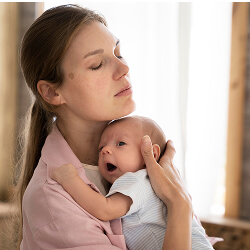
Many parents describe postpartum as a time of intense bonding — learning your baby’s cues, holding them close, and adjusting to your new role. Bonding may happen immediately. For others, it grows gradually. Both experiences are normal.
Explore practical ways to strengthen your bond with your newborn
When to Call Your Provider
Postpartum complications are uncommon but require prompt care when they occur. Contact your provider if you experience:
- Heavy bleeding
- Chest pain
- Severe headache
- Fever
- Signs of infection
- Thoughts of harming yourself or your baby
A Season of Adjustment and Awe
The postpartum period is demanding — and extraordinary. You have brought a new human into the world. Many parents describe a profound sense of pride and wonder as they begin this new chapter. Recovery is not just about returning to your pre-pregnancy body. It is about healing, adapting, and discovering life as a parent.
Get practical guidance on newborn care in the first days and weeks after birth