


Due Date Calculator
- Resources
- Due Date Calculator
Due Date Calculator Curious to Know Your Estimated Due Date?
Our easy-to-use pregnancy calculator is the number one most popular way to calculate your due date based on the date of your last menstrual period or conception date, IVF transfer date, or the date of your last ultrasound. By entering either of these dates, the calculator provides a reliable estimate of your due date, helping you track your pregnancy with ease.
Due Date Calculator
Pregnancy Calendar and Due Date Calculator
- Share This Tool:
- Share This Tool:
Featured Video
Check Out More Videos
Pregnancy Playlists
Frequently Asked Questions
How is my estimated due date calculated?
Calculated by adding 280 days (40 weeks) to the first day of your last menstrual period (LMP), this standard clinical method provides a helpful baseline for your journey. This approach assumes a 28-day cycle with ovulation at the midpoint. While this is the most common starting point, your healthcare provider may refine this date based on early ultrasound measurements.
What if I don’t know the date of my last period?
When menstrual cycles are irregular or the last period date is unknown, a dating ultrasound is used to determine an accurate due date. This clinical scan measures the baby’s length to establish a precise pregnancy timeline. Understanding your timeline early can provide significant peace of mind as you begin planning your prenatal care.
How accurate is an estimated due date?
An estimated due date is a helpful target, but only about 5% of babies are born on their exact date. It is natural to feel eager for your baby’s arrival, so it helps to view this date as a window rather than a fixed deadline. Most healthy pregnancies delivered between 37 and 42 weeks are considered full-term.
Can my due date change during pregnancy?
Yes, a due date may be adjusted during the first trimester as more clinical data becomes available. As your baby grows, ultrasound measurements provide a more precise view of development than a calendar alone. Your provider will update your roadmap to ensure you receive the most accurate and compassionate care at every stage.
How many weeks pregnant am I today?
Pregnancy is measured in gestational weeks starting from the first day of your last period, rather than the day of conception. This clinical standard means you are technically considered “two weeks pregnant” before conception occurs. Understanding this helps you align your personal timeline with your doctor’s prenatal appointment schedule.
Track Your Baby's Development
Subscribe to our week-by-week Pregnancy Newsletter
Free Pregnancy Resources are Available for You
Whether you are trying to get pregnant, are pregnant, preparing to give birth or have an infant the Pregnancy Questions Center is a trusted resource for the most important questions. The Pregnancy Questions Center is easy to use with quick answers and articles. We listened and each question came from someone just like you.
Did You Get a Positive Test? You Are Not Alone!
Speak or chat to a real person about your pregnancy, click the Chat Now button in the lower right corner or feel free to call our toll free helpline below.
Free: Live Helpline
1-800-672-2296
How Can My Estimated Due Date Be Calculated?
When estimating your due date, several methods can be used. The method you choose depends on the available information and your specific circumstances. Expand to see the primary ways of calculating your pregnancy due date.
This official page is maintained and verified by the APA Content Validation Team.
Last Revision: June 1, 2026
Last Menstrual Period (LMP)
The Last Menstrual Period (LMP) method is the most commonly used method to estimate a due date. It calculates your due date by counting 40 weeks (280 days) from the first day of your last menstrual period. This method assumes a regular 28-day cycle and ovulation occurring around day 14 of your cycle. It’s simple and widely used but may not be as accurate for women with irregular cycles or those who don’t ovulate on day 14.
To calculate your due date using LMP:
- Start with the first day of your last period.
- Add 280 days (or 9 months and 7 days).
While this method is effective for many women, it may not be suitable for those with cycle lengths longer or shorter than 28 days. For instance, women with longer cycles may ovulate later, which means their due date will need adjustment.
Conception Date
If you have been tracking ovulation or using ovulation test strips for recognizing your ovulation window, the Conception Date Method is a more accurate way to estimate your due date. This method adds 266 days (or approximately 38 weeks) to the date of conception. It is most accurate for women who have tracked ovulation closely or for those who know the exact date of conception (often through fertility treatments like IUI).
This method is particularly useful for women with irregular cycles or who have tracked ovulation through various methods like basal body temperature or ovulation predictor kits.
IVF Transfer Date Method
For women who conceive through In Vitro Fertilization (IVF), the IVF Transfer Date method is highly precise. This method uses the exact date of the embryo transfer to calculate the due date, as the transfer date is known with certainty.
- Day-three embryo transfer: If your transfer was on day three, your due date is calculated by adding 263 days from the transfer date.
- Day-five embryo transfer: If your transfer was on day five, your due date is calculated by adding 261 days.
IVF offers a very accurate calculation because the exact date of conception (embryo transfer) is known, eliminating any uncertainties associated with menstrual cycles or ovulation dates.
Ultrasound Scan
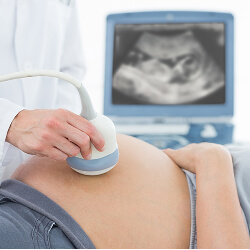
An Ultrasound scan is a reliable method for determining the due date, especially if you can’t pinpoint the date of conception or your last menstrual period. Early ultrasounds, typically taken in the first trimester, are most accurate for estimating the due date as they measure the size of the fetus, especially in the first 12 weeks.
In early pregnancy, ultrasound measurements of the fetus can often give a more accurate due date than LMP, especially for women with irregular cycles, those unsure of ovulation timing, or those who have longer or shorter cycles. If your due date is uncertain or if you have irregular periods, an ultrasound can be a helpful tool to confirm or adjust your estimated due date.
How Accurate is My Pregnancy Due Date?
Estimating your due date is an important part of pregnancy planning, but it’s essential to remember that it is an estimate. While the calculation can provide a general idea of when you can expect to give birth, the exact timing can vary for several reasons.
Several factors influence the accuracy of your due date, including cycle length, the method used, and any individual differences, such as IVF procedures or the timing of your ultrasound. For instance, the Last Menstrual Period (LMP) method assumes a 28-day cycle, which may not apply to women with shorter or longer cycles. Women with irregular cycles or those who don’t ovulate on day 14 may experience discrepancies between their calculated and actual due date. On the other hand, IVF and ultrasound methods tend to offer more precise due date estimates, as these are based on specific, trackable events like embryo transfer dates or early fetal measurements.
In general, while due dates are not guaranteed, they are still reliable and can help guide your preparations. Most pregnancies are delivered within a week or two before or after the estimated due date, with only about 5% of babies actually being born on their exact due date.
Can My Due Date Change?
Yes, due dates can change during pregnancy. For example, an ultrasound may adjust a due date because of the increased accuracy of using fetal measurements or if your cycle is longer or shorter than 28 days this can lead to a due date adjustment as well. While a Due Date Calculation provides a helpful general estimate, the actual due date may shift as new information becomes available or through the natural variability in the growth of each baby during pregnancy.
What If I Already Know My Due Date?
Even if you already know your due date, Our Pregnancy Due Date Calculator can still be incredibly helpful. By entering your known due date the Pregnancy Due Date Calculator can provide you with a detailed pregnancy timeline, outlining key milestones and symptoms, important prenatal tests, or reminders for prenatal visits based on your known due date.
Top Tools
Featured Video
Pregnancy Journeys
Whenever you’re ready, feel free to explore our other journeys for support at every stage of pregnancy.
Top Resources
You’re Never Alone on Your Journey
No matter where you are in your pregnancy
journey, you’ll always have our support.
- Free: Live Helpline
- 1-800-672-2296